A Houston-area family-owned syndicator that buys anchored retail, convenience stores and land across Texas, one single-asset partnership at a time: funded almost entirely by individual accredited investors and, since 2026, by EB-5 capital. Founded by Nadyrshah 'Nick' Dhanani.
CaveatDPEG advertises a 20–35% target return, weighted-average annual returns as high as 47%, and 278+ projects with $0 lost. Its own exits ledger shows why to read those carefully: the largest figures are short holds annualized, and many realizations are marked as reducing cost basis rather than a distributed return.jump ↓
CaveatTwo screens could not be completed for this profile, a federal court-docket search and independent verification of the Inc. 5000 rankings. Both are listed explicitly in the risk screen rather than passed over.jump ↓
CREsponsor scorecard
A standardized public-record assessment. Select any scored lens or profile factor to inspect the cited evidence. The overall grade is a weighted function of the scored lenses: it is not hand-set. Online reputation is unscored because the screen returned too little evidence to grade.
Geographic concentration
01
Texas · Houston-anchored
Profile factor
Almost entirely Texas, and overwhelmingly greater Houston: Fort Bend and Montgomery counties above all. San Antonio, Austin-corridor and one Irving asset are the only meaningful diversification.
Awards
02
58/100
Documented
Real recognition (Inc. 5000 placements and REjournals regional wins), but it measures growth and visibility, not investment outcomes, and rests here on the sponsor's own reporting.
Online reputation
03
Not scored
Profile factor
Screen run 2026-07-24 and returned too little to score: three Indeed reviews, no BBB profile, no public investor-review corpus, and login-walled social pages. Insufficient basis for a grade, rather than a low one.
Team expertise
04
55/100
Established
Deep operational Houston retail experience under a founder who built the 24Seven c-store brand, but six of eight principals come from two families, and only the founder's record appears in filings.
Risk screen
05
60/100
Monitor findings
No distress found. All 210 registered entities ran against Fort Bend's foreclosure notices, Jan 2025 to Aug 2026: none appears. Bexar, Montgomery, Travis and the federal docket also clean. Harris has no free name search.
Differentiator
06
No-promote + vertical stack
Profile factor
DPEG advertises no promote fee (100% of profit distributed proportionally), alongside an unusually complete affiliated-vendor stack: construction, insurance, title, lending, property management and energy.
Sources of capital
07
Retail accredited + EB-5
Profile factor
No institutional LP identified in filings or press. Capital comes from 3,500+ individual accredited investors at $50K–$100K minimums, plus foreign nationals investing $800K through a USCIS-approved EB-5 regional center.
Scores are CREsponsor editorial assessments of the cited public record, not ratings by any regulator. Methodology · Report a correction.
Track record
DPEG is unusual among sponsors this size in how much it publishes and how little of it can be checked. The scale figures are broadly consistent across three independent points: the sponsor’s own site, its EB-5 affiliate’s site, and an SEC-filed CMBS term sheet written by someone else’s underwriters. The return figures are a different matter: they appear only in the sponsor’s own marketing, and nothing in the public record confirms or refutes them.
50+Retail centers (independent)SEC-filed CMBS term sheet
45+Convenience stores (independent)SEC-filed CMBS term sheet
Single c-stores and strip centers; first 288-unit apartment build→$115M San Antonio power center; 50+ Reg D vehicles; EB-5 channel live
Independent figures come from a February 2026 CMBS term sheet prepared by the loan's underwriters, not by DPEG. Sponsor-reported figures are unaudited. BANK5 2026-5YR20 term sheet
What the sponsor advertises, and what backs it
The /about page is titled, literally, “278+ Projects, $0 Lost.” It publishes a 20–35% target return and a row of weighted-average annual returns:
Year
Weighted-average annual return (per sponsor)
2021
33%
2022
46%
2023
47%
2024
20%
2025
28%
Source: dhananipeg.com/about, accessed 2026-07-24. The EB-5 affiliate states the same idea in prose: “over 250 projects… we have seen profitability in every single one” (dhananieb5.com).
Three things an allocator should hold in mind. First, these are self-reported and unaudited; DPEG is not an SEC-registered investment adviser, files no Form ADV, and publishes no audited financials, so there is no regulatory filing against which to test them. Second, Texas is a non-disclosure state: county records do not carry sale prices, so even a deal-by-deal public reconstruction cannot corroborate a return. Third, a zero-loss record across 278 projects is a claim about survivorship as much as skill: it says nothing about how the losses that did not happen were avoided, and it is precisely the kind of claim that cannot be falsified from outside. CREsponsor reproduces the figures because the sponsor markets on them, not because they are established.
The realized book: 66 exits, and what they actually show
DPEG publishes something most private syndicators do not: a property-by-property exited-projects ledger listing 66 realized properties: 23 convenience stores, 27 retail, 11 land, 2 multifamily, 1 office and 2 hospitality, most with a sale month, an amount, and a stated ROI and annual return. That disclosure is a genuine mark in the sponsor’s favour and it deserves to be read carefully, because it also explains the headline numbers above.
A representative span, largest and smallest, exactly as the sponsor states them:
Exit
Sold
Amount
ROI
Annual return
Mayde Creek Apartments (multifamily)
Jul 2021
$51.6M
70%
30%
Anserra: 13.55-acre multifamily tract (land)
May 2023
$45.07M
Reducing CB
,
DPEG Imperial (18.64 ac to City of Sugar Land
May 2025
$11.16M
Reducing CB
),
Y-Shops at Highway 6 (retail)
Apr 2024
$10.94M
169.49%
26.08%
Y-Shops at Greenhouse (retail)
Apr 2025
$8.14M
130.86%
28.86%
Bear Creek (retail)
Oct 2025
$8.0M
34.09%
19.96%
Y-Shops at Williams Way (retail)
Mar 2022
$7.86M
225%
45%
DAV Entrepreneurs, Westheimer Pkwy (retail)
Nov 2022
$6.02M
332.13%
178.80%
Dhanani Katy (retail)
Oct 2025
$5.53M
247.04%
57.01%
Cottage Green BTR (preferred deal)
Dec 2024
$5.15M
9.62%
9.62%
24 Seven #2 (convenience store)
Dec 2021
$1.65M
609%
93.69%
Highway 6 (retail) (held 2m 9d
2026
),
92.22%
488%
Katy Office Condos (held 6m
2026
),
10%
20%
Four observations an allocator should take from that ledger.
“Reducing CB” is not a return. A large share of rows (including the two biggest land events, the $45.07M Anserra tract and the $11.16M Sugar Land sale), carry the notation “Reducing CB” in place of a return figure. Those are partial tranche sales whose proceeds reduced the cost basis or paid down loan balance rather than distributing a profit. They are portfolio management, not realizations, and they should not be read as wins.
The eye-watering annual returns are short holds, annualized. “488%” is a 92.22% ROI earned over two months and nine days, scaled to a year. The 178.80% figure behaves the same way. Annualizing a brief hold is arithmetically standard but it produces numbers that cannot be compounded or repeated, and it is very likely what lifts the advertised weighted-average annual returns into the 46–47% range for 2022–2023: years thick with land-tranche and pad-site sales.
These are ROI and annual-return figures, not IRR, and not net to an LP. Nothing on the page states whether they are gross deal-level or net of fees, promote (which DPEG says it does not charge), or affiliate costs. A deal-level gross return and what an investor actually received are different numbers.
The spread is wider than the marketing suggests. Alongside the 200%+ ROIs sit a 9.62% preferred BTR deal, a 10% office-condo exit and a 34.09% retail sale. That range is unremarkable and believable, and it sits oddly beside a blanket “$0 lost” claim across 278 projects.
None of this contradicts the sponsor. The exits ledger is more disclosure than most syndicators of this size offer, and the underlying deals are real, dated and addressed. It simply means the headline return figures describe a book weighted toward short-hold land and pad sales, and cannot be read as a durable annual rate of return on invested capital. Because Texas is a non-disclosure state, none of the amounts can be independently confirmed in county records.
What can be independently confirmed is the capital structure on the largest current asset, and it is genuinely conservative, see Risk screen.
A note on vintage. CREsponsor does not state a founding year for DPEG because the sponsor’s own materials disagree. Its homepage narrative says DPEG has operated “for over a decade,” its news index carries dated items back to December 2017, and the earliest DPEG Form D on file with the SEC is November 2021. Rather than pick one, all three are recorded here; the SEC filing history is the only one with a hard date attached. The homepage also shows a “Years of Operations” figure, but it is an animated counter whose settled value could not be read reliably, so it is not relied on.
Geographic footprint
Profile factor
Almost everything is within an hour of Stafford
Geographic concentrationTexas · Houston-anchored
Counted from the sponsor's own published site index (87 property pages) and cross-checked against Form D filing addresses and the San Antonio CMBS loan.
DPEG’s book is a Houston book. Of the 87 property pages the sponsor publishes, the overwhelming majority sit in greater Houston: Fort Bend County (Sugar Land, Missouri City, Stafford, Fulshear, Richmond, Needville, Beasley) and Montgomery County (Porter, Conroe, Cut & Shoot, Magnolia, Willis) most of all. The 2025 San Antonio acquisition and a 2026 Irving purchase are the first material steps outside that orbit.
Counts are of pages the sponsor publishes per property, not an independent asset count. The CMBS term sheet's independent tally is 45+ convenience stores and 50+ retail centers. sponsor site index
Enumerated from the sponsor's published property pages plus dated trade-press items. Square footages and prices are as reported by the sponsor or trade press except Park North, which is from the SEC-filed CMBS term sheet. sponsor site index
The concentration cuts both ways. A sponsor that has bought in Fort Bend County for a decade knows its submarkets, its tenants and its entitlement process better than a national buyer ever will. It is also, by construction, a single-economy bet: Houston employment, Texas property-tax policy and Gulf-coast insurance pricing hit nearly the whole book at once. The twelve land positions sharpen that: land produces no income while it is held, so its return depends entirely on entitlement and exit timing.
Scored on the depth of publicly verifiable record (filings, dated press, bios), not on competence. The founder's record is well-documented; the rest of the bench is documented almost entirely by the sponsor itself.
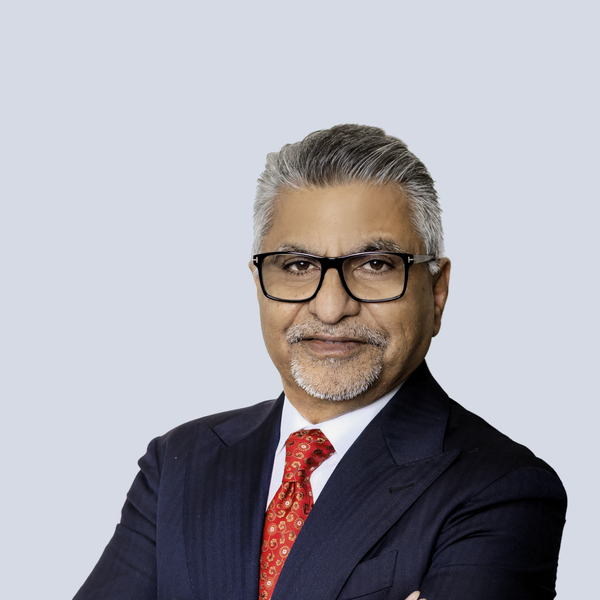
Nick Dhanani’s history is the most verifiable thing about DPEG and the most genuinely operational. He is described consistently (on his own site, on the EB-5 site, and in a CMBS term sheet written by third-party underwriters), as founder, Chairman and CEO, and he signs every DPEG Form D reviewed for this profile. His account of starting as a Shell gas-station cashier and building the 24Seven convenience-store brand roughly 30 years ago is self-reported, but the c-store portfolio it produced is independently confirmed at 45+ stores.
The governance fact an allocator should register: six of the eight listed principals come from two families: four Dhananis and two Wadhwanis. That is normal for a family firm and it is not a finding of any kind; it is simply a concentration of decision rights that a limited partner is entitled to price. Every Form D reviewed lists a single related person, Nadyrshah Dhanani, which makes key-man exposure the structural risk rather than any individual’s record.
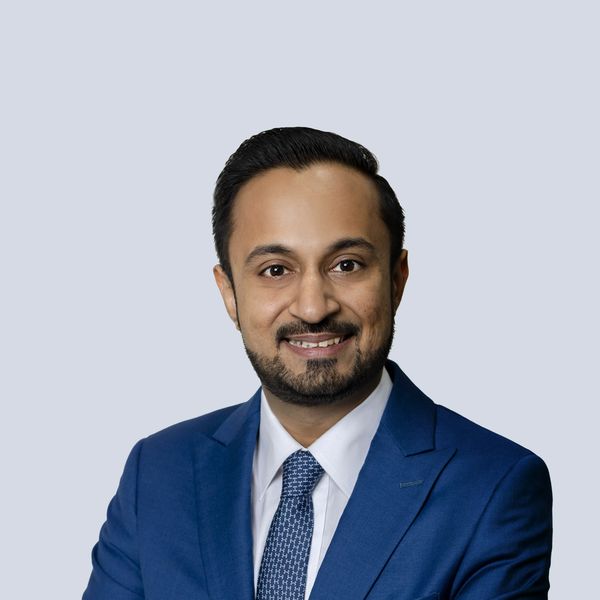
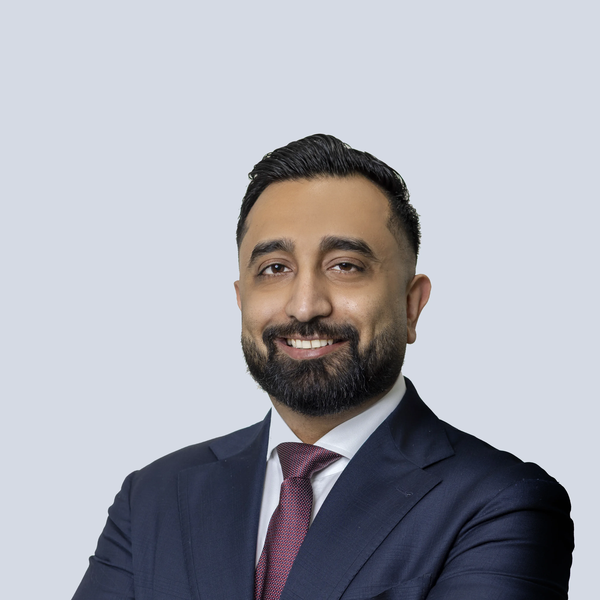
Four further principals carry divisional mandates and are listed without numeric scores: a bare score on a lower-profile private individual carries more defamation exposure than informational value, and their public records are thin by construction rather than by fault. Faiz Hirani is Principal, Investor Relations; Nick Dhanani, Jr. is Principal, Acquisitions & Dispositions (and Managing Associate at the EB-5 affiliate); Rahul Wadhwani is Principal, Head of Marketing & Brand Management; Aaryan Dhanani is Principal, Head of Capital Markets Initiatives (all per dhananipeg.com/people).
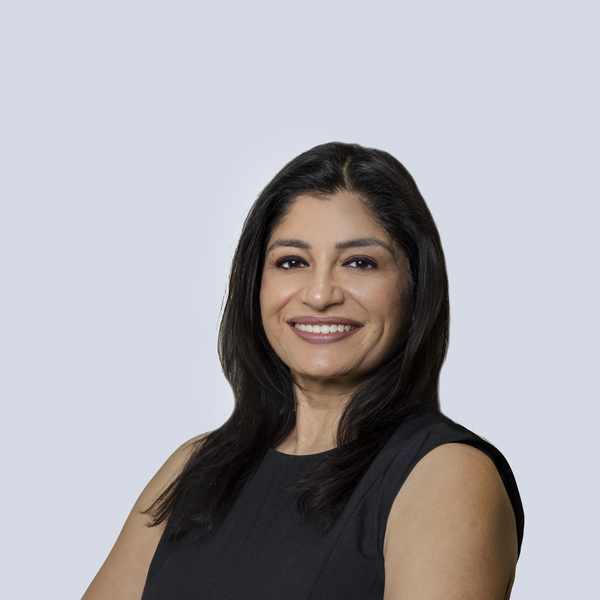
A separate services bench runs the affiliated operating companies: Jacob Fry (President & CEO, DPEG Multi-Family), Omoniyi Akindoju, PMP, CCCM (Partner, DPEG Construction), Ahmed Al Zadjali (Partner, DPEG Insurance), Doug Washington (COO, Dhanani EB-5 International) and Rahila Sultanali (attorney, Sultanali Law PLLC and Powerhouse Title). Priya Binion is Director of Investor Relations at the EB-5 affiliate. That Ms. Sultanali’s law and title practices sit on the sponsor’s own team page is the clearest published signal of how tightly the affiliated-vendor stack is bound to the sponsor, see The integrated platform.
Published contact points:invest@dhananipeg.com and 1-866-DHANANI (342-6264), both published by the sponsor. Investor administration runs through AppFolio Investment Management.
Risk screen
Public-record assessment
Nothing distressed found, and two checks that could not be closed
Editorial score60/100
Ten screens run 2026-07-24 and 2026-07-27 against SEC EDGAR full text, an independent CMBS term sheet, the Texas Comptroller entity roster, four county foreclosure indexes, trade press and general web search. Two screens could not be completed and are recorded as queued rather than clear.
Clear SEC enforcement, sponsor and principals EDGAR full-text search returns no enforcement action naming Dhanani Private Equity Group or Nadyrshah Dhanani. The unrelated 'Dhanani' hits in 8-K/10-K filings belong to other issuers (Telenav, Arvana, Paradigm Oil) and, absent hard identifiers, are treated as different people. EDGAR full-text search
Clear Form D compliance and vehicle structure More than 50 DPEG-named Reg D vehicles filed 2021-11 through 2026-06, each a single-asset Texas LP with Nadyrshah Dhanani as the listed related person. Filings are current and consistent; no withdrawn or amended-for-cause filings observed. Form D universe
Clear Debt structure, flagship asset The Park North acquisition loan is $83.375M at 5.923% fixed, interest-only for its full 60-month term to January 2031, underwritten at 1.72x NCF DSCR and an 11.3% debt yield with springing lockbox. Fixed-rate and well-covered: the opposite of the floating-rate profile that has driven Sun Belt syndicator distress since 2022. BANK5 2026-5YR20
Clear CMBS special servicing / distress No DPEG loan identified in special servicing or foreclosure as of 2026-07-24. The one securitized loan located is current and IO through 2031. This is a negative finding from a limited search, not a portfolio-wide debt review: most of the book is bank- or bridge-financed and therefore invisible in public data. BANK5 2026-5YR20
Finding Marketing claims vs. verifiable record The sponsor advertises a 20–35% target return, weighted-average annual returns to 47%, and '278+ projects, $0 lost' to an audience of individual accredited and EB-5 investors. No audit, filing or third-party source corroborates any of it, and DPEG files no Form ADV. The claims are not evidence of wrongdoing, but an unfalsifiable zero-loss record is the single most important thing for a prospective LP to press on in diligence. dhananipeg.com/about
Finding Related-party / affiliated-vendor exposure DPEG operates affiliated construction, insurance, title, lending, property-management and energy companies, and the CMBS term sheet names DPEG Management, LLC as the borrower-related property manager on the flagship asset. Combined with a stated no-promote structure, this makes affiliate fee flow (not carried interest), the place where GP economics would sit. No offering document is public, so the actual arrangement cannot be assessed. CMBS term sheet
Finding Non-real-estate exposure (style drift) DPEG publishes a technology portfolio with two venture positions: DPEG Sakuu, LLC (Sakuu Corporation, a San Jose solid-state battery maker) and DPEG Tsecond, LLC (Tsecond, Inc., data transport, alongside Boeing). A Form D for DPEG Sakuu 2.0, LP was filed April 2024. The sponsor says it looks 'beyond traditional real estate' and is 'open to any investment projects.' Venture risk is a different discipline from Texas retail: confirm which vehicle holds what. DPEG technology portfolio
Clear Federal court dockets Run 2026-07-29 and clean. No federal case names Dhanani Private Equity Group or a DPEG entity as a party: the 32 hits on a DPEG query are OCR noise from an unrelated opioid MDL exhibit, and the 440 on the surname alone are unrelated individuals. Control: the same archive returns a signed MDL 3071 order naming 'Defendant Knightvest Residential'. The previous note here recorded CourtListener as permission-blocked; it is not. CourtListener dockets
N/A EB-5 program exposure Dhanani EB-5 International is described as a USCIS-approved regional center raising $800,000 tickets for Territory at Audubon. USCIS regional-center designation and I-526 outcomes are outside CREsponsor's verification scope; EB-5 investors carry immigration-outcome risk on top of real-estate risk, and should diligence the regional center's USCIS standing directly. dhananieb5.com
Clear, partial Foreclosure (county records) Clean in every county reached, against controls. Swept the 210-entity roster rather than the property list: Fort Bend (the HQ county, holding the largest concentration of the book), Bexar, Montgomery and Travis all return no Dhanani entity as grantor. Harris is the gap and it is structural, not undone work: its index browses only by document ID or sale month, with no party or address column, so no free name search reaches it. Logged in open: and not scored. Fort Bend foreclosure notices
Screens as of 2026-07-27.
The honest summary is a split verdict. On the things that can be checked in filings, DPEG looks careful: fixed-rate debt with real coverage, an orderly and consistent Reg D filing history, no enforcement, no visible distress. On the things that cannot be checked, it markets aggressively: advertised returns that would be top-decile for any institutional manager, and a zero-loss claim that no sponsor can substantiate from outside. Those two observations are not in tension; they simply describe where the diligence burden falls.
Awards and designations
Public-record assessment
Real recognition, mostly regional and growth-based
Editorial score58/100
Scored on independence and substance of the granting body. Inc. 5000 is a real revenue-growth ranking; regional trade awards are real but promotional; a pay-to-list biographical registry carries no signal.
A genuine, methodology-driven revenue-growth ranking. CREsponsor could NOT independently confirm the placements (inc.com was unreachable in this environment), so this rests on the sponsor's own page.
The pattern is worth naming plainly: DPEG’s recognition is real but it measures growth and visibility, not investment outcomes. Inc. 5000 ranks revenue growth. Regional trade awards reward deal activity and community presence. None of them is a performance audit, and none should be read as third-party validation of the returns advertised above.
Online reputation
Profile factor
Too little third-party evidence to grade
Online reputationNot scored
Screen run 2026-07-24 across search, employer-review sites, BBB and social platforms. The evidence found was too thin to support a grade in either direction.
BBB No profile found No Better Business Bureau profile located for the sponsor (checked 2026-07-24)
This lens is left deliberately unscored. A retail-and-c-store landlord does not generate the resident-review corpus an apartment operator does, and DPEG’s investor base is private, so there is no public LP sentiment to read either. Four data points (two of them mere follower counts, and the social pages login-walled so no rating on them can be independently checked), cannot distinguish a well-regarded sponsor from an unexamined one. Scoring it would manufacture precision that the evidence does not support. What would change the picture: a Better Business Bureau profile, a meaningful Glassdoor corpus, or any public investor forum discussion.
The integrated platform
Profile factor
An unusual fee promise, and an unusually complete affiliate stack
DifferentiatorNo-promote + vertical stack
Based on the sponsor's published fee representation and its own enumeration of affiliated operating companies, cross-checked against the property manager named in the CMBS term sheet.
Two features distinguish DPEG from the typical Sun Belt syndicator, and they are best read together.
The first is the fee representation. DPEG states on its homepage that it charges no promote fee and distributes “100% of profit… proportionally,” alongside full transparency with monthly statements, collective decision-making, and GP co-investment in every deal (dhananipeg.com). A true no-promote structure is genuinely rare: the standard syndication charges an acquisition fee plus a 20%-or-better carried interest above a preferred return.
The second is the affiliate stack. DPEG operates, by its own enumeration, DPEG Construction, DPEG Insurance, DPEG Property Management, DPEG Title, DPEG Lending, DPEG Energy and DPEG Foods, plus the DPEG Foundation (dhananipeg.com/dpeg-services, dhananieb5.com). The sponsor’s own team page lists an attorney whose law firm and title company serve the platform. And the CMBS term sheet independently names DPEG Management, LLC: flagged “borrower-related”, as property manager on the flagship asset.
Held together, these describe a plausible and coherent model: forgo the promote, and earn the platform’s economics through the operating companies that build, insure, title, finance and manage the assets. That is not a criticism: vertical integration genuinely can improve execution, and a sponsor that makes its money on operations rather than a promote has different incentives around holding periods. But it does relocate the diligence question. The question is not “what is the promote?” but “what do the affiliates charge, and how are those contracts priced against market?” No offering document is public, so CREsponsor cannot answer it. Any prospective investor should ask for affiliate fee schedules in writing.
Recent activity
2026-04-28Positive
Acquires Irving retail asset for $46.82M
Acquisition
First material Dallas-Fort Worth purchase, extending the book beyond its Houston-San Antonio-Austin triangle.
An open-ended vehicle with an indefinite offering amount, a structural departure from the single-asset LPs DPEG has used since 2021. $7.25M raised from 14 investors at a $50K minimum, first sale 2026-04-07.
635,325 SF Target-anchored center bought from Sterling Organization; reported at $115M by trade press and financed with an $83.375M fixed-rate, full-term-IO loan later securitized in BANK5 2026-5YR20. Largest transaction in company history.
The City of Sugar Land acquired the historic Imperial Char House development site from Nick Dhanani and Richard Hunton Jr., one of the few DPEG exits visible in the public record.
2022-12-29: Sponsor announces it has “hit the billion dollar mark” and expands in Fort Bend County.
2022-12-12: Buys the former Fluor campus in Sugar Land for mixed-use redevelopment.
2021-12-14: Argentic lends $59.2M against a Stafford retail property.
2020-03-19: Completes Territory at Greenhouse, a 288-unit community in metro Houston; Allied Orion Group served as general contractor and manager.
2019-03-15: Breaks ground on Territory at Greenhouse, its first large apartment development.
2017-12-06: Opens a Wendy’s and a 24 Seven convenience store, the c-store roots of the platform.
Sources of capital
Profile factor
No institutions: individuals, and immigration capital
Sources of capitalRetail accredited + EB-5
Established from 50+ Form D filings, the sponsor's own investor-base disclosures, and the EB-5 affiliate's published offering terms. No institutional LP was identified in any source.
No institutional limited partner surfaced in any screen: DPEG’s equity is individual accredited money raised deal by deal across more than 50 single-asset Texas LPs since November 2021 (DPEG Fountains sold $31.05M to 210 investors at a $50,000 minimum), supplemented by EB-5 immigration capital at $800,000 per investor plus an $80,000 fee (dhananieb5.com) and an affiliated lending vehicle. Individuals therefore bear the entire equity loss, as they do at S2 Capital and unlike CAF Capital Partners, and the forward item is the DPEG Real Estate Fund, filed April 2026 as a perpetual commingled vehicle rather than another one-property partnership.
How Dhanani Private Equity Group compares
RREAF Holdings: the nearest peer, a Texas platform running several verticals at larger stated scale, and the better test of whether multi-vertical breadth is depth or spread.
Moody National: overlapping hospitality exposure in Texas, and a longer public record on the hotel side.
The Jenkins Organization: the other directory sponsor built on operating real estate rather than syndicated multifamily, a useful comparison for the operating-company model.
All figures on this page are either (a) drawn from SEC filings and identified as such, (b) drawn from an independent third-party CMBS term sheet, or (c) reported by the sponsor and explicitly tagged “per sponsor.” Nothing here is an estimate by CREsponsor.
Government and independent filings
BANK5 2026-5YR20 term sheet, Mortgage Loan No. 3, Park North; borrower, guarantor, property manager, loan terms, and an independent portfolio count
Predominantly Texas retail (grocery- and big-box-anchored shopping centers), plus convenience stores under the 24Seven brand, raw and entitled land, suburban office bought at a discount, and a growing build-to-rent and multifamily line under the Territory brand. An independent CMBS term sheet filed with the SEC in February 2026 describes DPEG as managing a portfolio of over 45 convenience stores and 50 retail centers.
Who founded and runs Dhanani Private Equity Group?
Nadyrshah "Nick" Dhanani is founder, Chairman and CEO: a fact stated both on the sponsor's site and in a third-party CMBS term sheet where he is the non-recourse carveout guarantor. He signs every DPEG Form D reviewed. Nikhil Dhanani is President, Ali Wadhwani is CFO, and Lucy Singh is COO, per the sponsor's people page.
Where is Dhanani Private Equity Group headquartered?
11333 Fountain Lake Drive, Stafford, Texas, per its 2026 SEC Form D filings. Earlier filings from 2021 and 2022 list 1455 Highway 6 in Sugar Land; the sponsor opened the current corporate headquarters in 2023.
How big is Dhanani Private Equity Group?
The sponsor reports roughly $2 billion in cumulative transaction volume across 45+ convenience stores, 50+ retail centers and more than 3,000 Class A multifamily units (per dhananieb5.com). Independently, an SEC-filed CMBS term sheet puts the portfolio at over 45 convenience stores and 50 retail centers, and more than 50 DPEG-named Form D vehicles appear in EDGAR between 2021 and 2026. The headline totals on the sponsor's homepage are animated counters whose settled values could not be read reliably, so they are not cited here.
What returns does Dhanani Private Equity Group advertise?
Its own site advertises a 20–35% target return and publishes weighted-average annual returns of 33% (2021), 46% (2022), 47% (2023), 20% (2024) and 28% (2025), alongside a claim of 278+ projects with $0 lost. These are self-reported and unaudited. No public filing, audit or third-party source corroborates them, and CREsponsor could not verify any of them.
Does Dhanani Private Equity Group publish a realized track record?
Yes: unusually for a private syndicator. Its exited-projects page lists 66 realized properties (23 convenience stores, 27 retail, 11 land, 2 multifamily, 1 office, 2 hospitality), most with a sale month, amount and stated ROI. Read it with two caveats: many rows show "Reducing CB" instead of a return, meaning proceeds reduced cost basis rather than distributing profit; and the highest annual-return figures are short holds annualized, one is a 92% ROI over two months and nine days, presented as 488% annualized. The figures are ROI and annual return, not IRR, and are not stated net to an investor.
Does Dhanani Private Equity Group invest outside real estate?
Yes. It publishes a technology portfolio with two venture positions (DPEG Sakuu, LLC, in a San Jose solid-state battery manufacturer, and DPEG Tsecond, LLC, in a data-transport company invested alongside Boeing), and states it is open to non-real-estate opportunities. A Form D for DPEG Sakuu 2.0, LP was filed in April 2024. Venture investing is a materially different risk discipline from Texas retail.
Who are Dhanani Private Equity Group's investors?
Individual accredited investors, not institutions. Form D filings show minimums of $50,000–$100,000 and investor counts as high as 210 in a single deal vehicle. The sponsor reports a base of more than 3,500 investors across 23 states and two Canadian provinces. A separate channel, Dhanani EB-5 International, raises $800,000 tickets from foreign nationals seeking US permanent residency. No public pension, endowment or sovereign commitment was identified.
Does Dhanani Private Equity Group charge a promote?
The sponsor states it charges no promote fee and distributes 100% of profit proportionally, and says it co-invests in every project. Note separately that DPEG operates affiliated construction, insurance, title, lending, property-management and energy companies, and an SEC-filed CMBS term sheet names DPEG Management, LLC as the borrower-related property manager on its largest asset. CREsponsor has not seen an offering document, so how GP economics accrue across those affiliates is not public.
Is Dhanani Private Equity Group involved in litigation or SEC enforcement?
No SEC enforcement action naming Dhanani Private Equity Group or Nadyrshah Dhanani was found in EDGAR full-text search as of 2026-07-24; the unrelated "Dhanani" hits in EDGAR belong to other issuers and other people. A federal court-docket search could not be completed for this profile: see the risk screen for exactly which checks ran and which did not.
Revision history4entries
Two screens closed, and one of them only because an inherited blocker turned out to be false. The federal-docket row had read NOT RUN, recording CourtListener as permission-blocked in this environment. It is not blocked and was queried directly: no federal case names Dhanani Private Equity Group or any DPEG entity as a party, the 32 hits on a DPEG query being OCR noise from an unrelated opioid MDL exhibit and the 440 on the surname alone being unrelated individuals. Controlled against the same archive returning a signed MDL 3071 order naming a real defendant, so this is a proven absence rather than an empty search. Bexar was also checked and is clean, on the 11333 Fountain Lake registered address and on the DPEG token that 165 of the 210 roster entities carry. Harris remains the reason the foreclosure row is still queued: its index browses only by document ID or sale month and no free name search reaches it. No score changed.
Sources of capital condensed to a two-sentence statement with inline sources. The section had grown to 11-131 lines per page of LP cards, fund cards and audit trail; the facts that decide an allocation (who the capital comes from, and who absorbs a loss) were being carried by a slab most readers skip. Every claim and link in the short version is carried over from the long one, and the per-vehicle detail remains in git history, in the FAQ entries for minimums and fees, and in `sources[].gave:`. No score changed: the lens is value-mode and carries no weight in the hero grade.
Foreclosure screen run properly for the first time, roster-first. The Texas Comptroller franchise-tax dataset returns 210 entities registered at DPEG's Stafford office, about 45 of which carry no DPEG token and were therefore invisible to every earlier brand-based search; that roster, not the sponsor's property directory, became the query set and is now recorded in entity_pattern. Fort Bend County, the HQ county and the largest concentration of the book, publishes its foreclosure notices as monthly text-searchable PDF bundles: 19 of them covering January 2025 to August 2026 were downloaded and matched against all 210 entities, and none appears in any bundle. The negative is control-tested in both directions: each bundle carries 540 to 714 occurrences of SUBSTITUTE TRUSTEE, and the matcher was verified to hit real parties (Pennell Law Firm, Auction.com) while missing a fabricated name. Bexar (OCR index healthy at 7,581 notices, zero DPEG), Montgomery (zero DPEG) and Travis (three instruments under the DPEG prefix, all warranty deeds or transfers, no foreclosure document type) are clean as well. Two apparent hits were resolved as false positives and logged so they are not re-chased: a Dhanani token belonging to a deceased individual's probate estate on a single-family lot, and two homeowner foreclosures inside the Anserra subdivision DPEG developed, where the defaulting borrowers are lot buyers rather than the sponsor. Harris County could not be closed and is the one material gap: its foreclosure index browses only by document ID or sale month, the 2026-08-04 sale alone returns 756 rows with no party or address column, and the document links carry opaque encrypted IDs, so the row stays queued rather than clear. Risk lens 55 to 60. Also recorded from the same roster sweep: EDGAR full text on Dhanani returns 83 filings across an issuer set wider than the DPEG name, including Anserra Developers, Imperial Community Center, Nexus Ventures XII Territory Anserra and Kabir Real Estates, plus DPEG Williamstown, which files with the SEC but is absent from the Comptroller roster.
Initial publish. Identity and leadership confirmed against SEC Form D filings (Nadyrshah Dhanani signs every DPEG vehicle reviewed) and independently against the BANK5 2026-5YR20 CMBS term sheet, which names him Chairman/CEO/founder and non-recourse carveout guarantor. Portfolio scale corroborated independently at 45+ convenience stores and 50+ retail centers by that same filing, against 87 property pages in the sponsor's own sitemap. Capital structure documented on the flagship Park North acquisition (San Antonio, $83.375M loan, 5.923% fixed, full-term IO, 1.72x UW NCF DSCR, 11.3% debt yield). Form D economics captured for three vehicles including DPEG Fountains ($31.05M fully sold across 210 investors, $50K minimum). Sources of capital established as retail accredited plus a USCIS-approved EB-5 regional center at $800K per ticket: no institutional LP identified. Advertised returns (20–35% target; 33/46/47/20/28% weighted-average annual 2021–2025) and the '278+ projects, $0 lost' claim reproduced as unverified sponsor claims. Realized track record captured from the sponsor's own exited-projects ledger (66 exits with sale months, amounts and stated ROI), with three qualifications recorded: many rows show 'Reducing CB' (proceeds reducing cost basis) rather than a distributed return; the highest annual-return figures are short holds annualized (92.22% ROI over 2m 9d presented as 488%); and the figures are ROI, not IRR, and not stated net to an investor. Non-real-estate exposure documented: DPEG Sakuu, LLC (solid-state battery manufacturer) and DPEG Tsecond, LLC (data transport, alongside Boeing). SEC enforcement screen clear; federal docket screen could not be run. Online-reputation lens left pending for want of evidence; grade derives from the four scored lenses.

,pin-l-2+315b8f(-98.4936,29.4241),pin-l-3+315b8f(-97.7431,30.2672),pin-l-1+315b8f(-96.9489,32.814)/auto/320x140@2x?padding=28&access_token=pk.eyJ1IjoiYWdhbXBpbHBlbCIsImEiOiJjbWl0OXc3ejUwcm1mM2hweGc1bzk1M2trIn0.YY4p--2DUf6NXIs9ZimyLg)